Blog
Why Connected Workflows Matter for Portable Operators
Portable operators need more than disconnected tools and spreadsheets. See how connected workflows improve dispatch, billing, service, visibility, and growth.

Software Built for Portable Storage, Sanitation, Trailers, Containers, and More
Spreadsheets are familiar. They’re flexible. They’re easy to start with.
For many portable storage, portable sanitation, trailer, container, and rental operators, spreadsheets are often the first “system” used to track customers, assets, deliveries, pickups, billing, service schedules, and team responsibilities.
And at first, they work.
A spreadsheet helps organize small operations, track basic information, and get through the day. But as businesses grow, spreadsheets create the exact problems they were supposed to solve.
The issue usually isn’t that teams need more spreadsheets.
The issue is that teams need better data.
Better data gives portable operators visibility into what happens across the business: where assets are, what needs to be serviced, what is ready to bill, which customers need attention, which routes are inefficient, and where revenue may slip through the cracks.
More spreadsheets usually mean more manual work, more disconnected information, and more room for error.
Portable operations move fast.
A customer calls to request a delivery. A driver completes a pickup. A unit needs service. A container changes location. A quote needs follow-up. A recurring invoice needs to go out. A route changes because of weather, traffic, staffing, or customer timing.
When updates live in separate spreadsheets, sticky notes, inboxes, text threads, and individual team members’ heads, it is difficult to know what actually happens in real time.
This creates operational friction.
Common spreadsheet challenges include:
For a small operation, this may be manageable for a while. But as order volume, asset count, service requirements, and customer expectations increase, spreadsheets become harder to trust.
And when data is hard to trust, decisions become harder to make.
Portable operators need to do more than just store information. They need to use information.
That is the difference between having data and having visibility.
A spreadsheet may tell you what someone entered last week. Better operational data tells you what is happening now, what needs attention, and what action should happen next.
For portable operators, better data can improve visibility across:
When this information is connected, operators can make faster, smarter decisions.
Instead of asking, “Where is that spreadsheet?” or “Who updated this last?” your team can ask better questions:
That is the real value of better data.
One of the biggest risks of spreadsheet-based operations is revenue leakage.
Revenue leakage happens when a business earns less than it should because something is missed, delayed, underbilled, mispriced, or not tracked correctly.
In portable operations, this can show up in several ways:
None of these issues may seem major on their own. But over time, small gaps can add up.
Better data helps close those gaps.
When dispatch, service, billing, customer records, and asset tracking are connected, operators can reduce the chances that work gets completed without being captured, billed, or followed up on.
Dispatch is one of the most important areas where spreadsheets can quickly fall short.
Portable operators need to know who goes where, what equipment is needed, which jobs are ready, which stops are complete, and what has changed during the day.
A spreadsheet may show the original plan. But operations rarely go exactly according to plan.
A customer may reschedule. A driver may need a new route. A unit may not be ready. A job may take longer than expected. A service stop may need to be added. A pickup may become urgent.
When dispatch data is disconnected, teams spend too much time confirming details manually.
Better dispatch data helps teams:
For portable operators, better dispatch visibility is not just about saving time. It can improve customer experience, reduce operational stress, and help the business complete more work with fewer avoidable errors.
Assets are the heart of a portable operation.
Whether a company rents portable storage containers, restrooms, office trailers, mobile storage units, dumpsters, or other equipment, the business depends on knowing where assets are and how they are being used.
Spreadsheets can track asset lists. But they are often less reliable when assets are constantly moving between yards, job sites, customers, service locations, and available inventory.
Better asset data helps answer critical questions:
Without accurate asset data, operators can end up buying more equipment than they need, missing rental opportunities, delaying orders, or losing visibility into what is actually available.
Better data helps operators use the assets they already have more effectively.
Customers do not see the spreadsheet chaos behind the scenes.
They only experience the result.
If a delivery is late, a pickup is missed, an invoice is wrong, or a service request falls through the cracks, the customer feels the impact.
Better data gives customer-facing teams the context they need to respond quickly and confidently.
Instead of searching through spreadsheets, emails, notes, and text messages, the team can see customer history, job status, asset details, billing information, and service activity in one connected view.
That makes it easier to answer questions like:
When teams have better data, they can give customers better answers.
And in a competitive market, responsiveness matters.
Many operators want better reports.
They want to know which services are most profitable, which assets are underused, which customers are growing, which markets are performing, and where the business has opportunities to improve.
But reporting is only as good as the data behind it.
If the source information is scattered, outdated, duplicated, or manually entered in different formats, reporting becomes slow and unreliable.
That often leads to a frustrating cycle:
Better data changes that cycle.
When operational information is captured consistently and connected across the business, reporting becomes more useful. Operators can move from reactive reporting to proactive decision-making.
Instead of simply asking, “What happened last month?” leaders start asking, “What should we do next?”
When a process breaks, the first instinct is often to create another spreadsheet.
Need to track pickups? Create a spreadsheet.
Need to monitor open quotes? Create a spreadsheet.
Need to organize service schedules? Create a spreadsheet.
Need to manage billing exceptions? Create a spreadsheet.
Need to track assets by location? Create another spreadsheet.
Before long, the business is running on a patchwork of files.
Each spreadsheet may solve one problem in isolation. But collectively, they create more manual work.
The team has to update multiple places, check for inconsistencies, reconcile information, and constantly ask which version is correct.
This is especially challenging when teams are growing, roles are changing, or institutional knowledge lives with only a few people.
A better data system reduces the need for duplicate tracking. It gives the team one more reliable source of truth, so information can flow across departments instead of getting trapped in disconnected files.
Not every business needs to replace spreadsheets overnight, but there are clear signs that spreadsheets are holding the operation back.
Your portable operation may need better data if:
These are not just administrative issues. They are growth issues.
The larger the business gets, the more expensive disconnected data becomes.
Better data does not mean more complicated systems.
It means clearer, more connected information that helps your team operate with confidence.
For portable operators, better data should be:
The goal is not to collect data for the sake of collecting data. The goal is to make the business easier to run, easier to scale, and easier to understand.
Growth creates complexity.
More customers. More assets. More routes. More invoices. More service needs. More people involved in the process.
Without better data, growth can feel chaotic. Teams work harder, but not always more efficiently. Leaders have more activity to manage, but not always more clarity.
Better data helps operators grow with more control.
It can help teams:
Portable operators do not need more places to enter information. They need better visibility into the information that already drives the business.
Spreadsheets are not bad.
They are useful tools. But they are not always the best foundation for a growing portable operation.
At some point, the question becomes less about how many spreadsheets the team can manage and more about how much visibility the business needs to operate well.
Portable operators need data they can trust.
They need systems that connect the field to the office, dispatch to billing, assets to customers, and daily work to long-term growth.
Because the future of portable operations will not be won by the companies with the most spreadsheets.
It will be won by the companies with the clearest view of their business.
Omni~View helps portable operators connect the critical parts of their business, from dispatch and asset tracking to billing, reporting, customer management, and growth.
If your team is relying on too many spreadsheets, disconnected processes, or manual workarounds, it may be time for a better view.
Spreadsheets can become a problem when they are used to manage fast-moving operational work like dispatch, billing, asset tracking, service schedules, and customer history. As the business grows, spreadsheets are harder to keep updated, harder to trust, and harder to connect across teams.
Portable operators should track asset location, availability, utilization, dispatch status, service history, customer activity, billing status, quotes, recurring revenue, and operational performance. The most important data is information that helps the team make better daily decisions.
Better data can help portable storage operators understand where containers are, which units are available, which assets are underused, which customers need follow-up, and which jobs are ready for delivery, pickup, service, or billing.
Better data can help portable sanitation operators manage service schedules, route planning, unit location, customer requests, billing, and recurring service activity. It can reduce manual coordination and improve visibility between the field and office.
A portable operator should consider moving beyond spreadsheets when the team struggles to track assets, dispatch work, billing, customer history, or reporting in one reliable place. If spreadsheets create confusion, duplicate work, or missed revenue opportunities, the business likely needs better operational visibility.
Share This Article
Portable operators need more than disconnected tools and spreadsheets. See how connected workflows improve dispatch, billing, service, visibility, and growth.
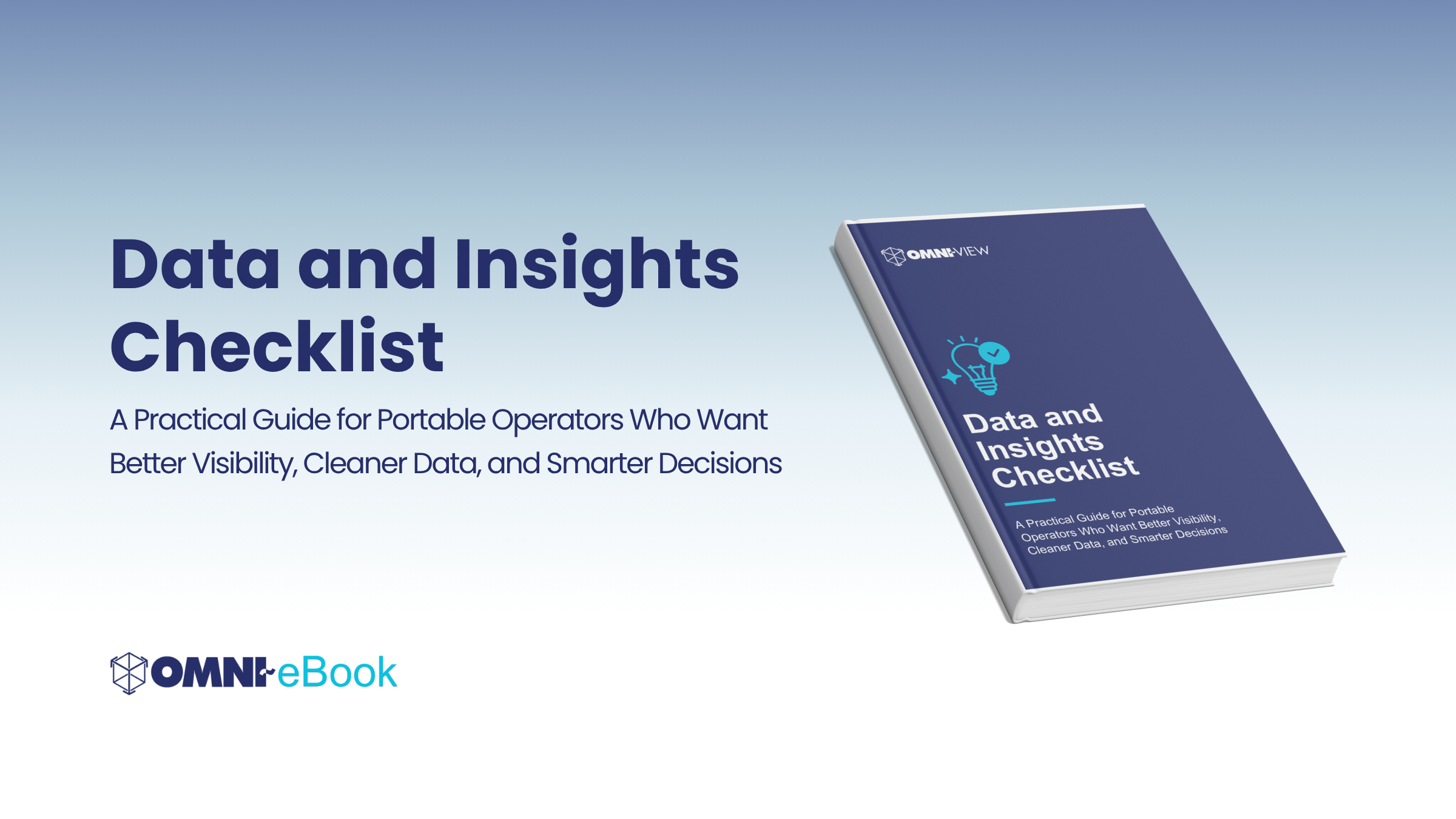
Download Omni~View’s Data and Insights Checklist to evaluate business visibility across assets, dispatch, billing, customers, reporting, and operations.
Learn what portable operators need to know about Omni~View NextGen, including better visibility, cleaner workflows, and what comes next.
See how one connected platform powers portables and rental businesses, from booking to backend
(and zero spreadsheets)
