Operating Systems Build More Efficient Portable Storage Companies

How connected technology helps operators work smarter today and prepare for what comes next

The portable storage industry is built on movement. 

 Containers move in and out.  
 Drivers move across routes.  
 Orders move from quote to booking to billing.  
 Teams move between customers, operations, accounting, and service work every day. 

That constant motion is what makes the industry dynamic. It’s also what makes efficiency non-negotiable.  

As operators grow, complexity grows with them; more assets, more customers, more locations, more pressure to know what’s available, where it is, and who owns what happens next. 

Efficiency isn’t about moving faster. It’s about creating clearer, more connected ways to work. 

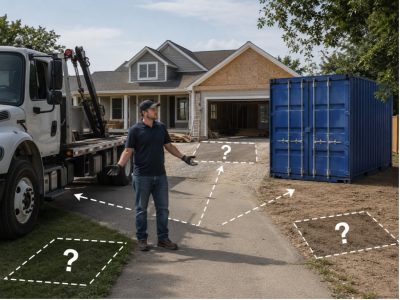
portable storage dispatch - man wondering where unit goes - solve this problem with an operating system built for portable storage
For companies on the move, the details matter. And proper operating systems help align and connect those details

The Person with Seven Spreadsheets

Many growing operators relate to this situation. The person who created seven beautiful, color-coded spreadsheets that track inventory, dispatch, billing, customers, service, drivers, but only a few are allowed to touch (or understand). These spreadsheets are the holy grail of the business – and the albatross around its neck. 

While spreadsheets can be heroic, they’re also the ceiling. The moment you try to scale, hire, or move faster, they break because the knowledge lives in one person’s head, data lives in seven files, and the business lives somewhere in between.  

One fat thumb and an asset is lost, or not billed properly. Don’t get us started on the group chat/what’s app where all dispatch information is sent through and stored.  

An operating system replaces the “seven seas of spreadsheets” with one connected source of truthNo hunting through tabs for the status of an order, a transportation task, or a customer detail. The information is where the work is.

7seas_omniview_blog
Many companies get lost in a sea of spreadsheets. They start as a first rudder, but over time, are a blocker to growth

What an Operating System Actually Does

An operating system aligns and moves information through purchases, inventory, customers, communications, quotes, orders, dispatch, and billing in one system. It moves relevant information to the right order, customer, inventory asset, and driver in one fluid motion, giving insight and operational efficiency.  
 
If your software (or spreadsheet) can’t track what’s coming in to give your sales team insights into what they can sell — and get it from depot to customer as fast as possible — that’s a limitation, not an operating system. 

If your software for a portable storage company doesn’t have dispatch planning, can’t account for the asset moving, and doesn’t give drivers a tool to get them where they need to go and drop with pinpoint precision (set the location for future visibility, gather signature, take photos, capture notes, inspect the asset), and can’t automatically communicate with customers and ops teams along the way, that’s a big limitation for a company on the move. 

And the driver executing that task? Everything they do should update the asset’s location. Those photos should live with the order, the transportation task, the inventory item, and the customer.  

Integrated systems connect every asset and every bit of information — so your team isn’t searching; they’re acting. 

Practical Improvements Add Up

Efficiency rarely comes from one big change. It comes from improving the workflows teams touch every day. Better dashboards so leaders see inventory, sales, accounting, and operations without piecing together reports.  

Customer and asset-specific pricing that produce cleaner billing. Enhanced customer records, e-signature, communication, and notification tools that live together and cut duplicate work. Improved customer lookup. Stronger user management as teams grow. 

None of it sounds flashy. All of it gives people their time back and keeps the business moving. 

Efficiency Creates Capacity

Efficiency isn’t only about cost savings. It supports growth.  

 When teams have better information, they respond to customers more quickly.  

 When dispatch has clearer visibility, routes are planned with confidence.  

 When billing and payments are connected to operations, fewer gaps exist between work completed and revenue collected.  

 When leaders see trends clearly, they make better decisions about people, assets, and expansion. 

Efficiency creates capacity — more room to serve customers, support employees, and scale without adding complexity. 

Built Through Industry Partnership

A good industry operating system is built directly from customer conversations, field feedback, and the day-to-day needs of teams doing the work. Partnerships should shape dashboards, dispatch tools, and more – not something being glued on from another industry or cobbled together for a minimal viable product.  

Personally, we know the work that goes into building a robust operating system and how it impacts operators of all sizes.  

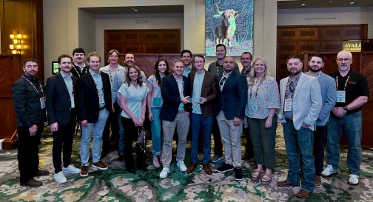
Being named the 2026 NPSA Supplier of the Year was a meaningful recognition for the work that we’ve done alongside our partners and continue to embark on as the leading operating system for the industry.

2026 NPSA Supplier of the Year
NPSA members and Omni~View user’s gather to celebrate their partnership and the NPSA Supplier of the Year award

Moving the Industry Forward

The future of portable storage won’t be defined by technology alone. It will be defined by operators who adapt, improve, and find smarter ways to serve their customers. 

The goal isn’t to make the work more complicated; it’s to make the work flow better.  

 More connected teams.  

 More visible operations.  

 More efficient yards.  

 More streamlined routes.  

 Stronger businesses. 

That’s where the industry is headed — and a lot of the progress is already underway. 

Share This Article

Related Resources

Find Out How to Work Smarter

See how one connected platform powers portables and rental businesses, from booking to backend
(and zero spreadsheets)